10 Best Circular Screen Manufacturers for Global Buyers
A Circular Screen can look simple on a catalog page: a round deck, mesh panels, and a vibrating drive. In a working plant, those details influence throughput, separation accuracy, noise, and maintenance time. A screen handling wet mineral feed may need different materials and settings from one processing dry grains or aggregates. Small differences matter. Global buyers also weigh delivery schedules, spare-parts access, technical support, and the ability to adapt a machine to local operating conditions.
This guide introduces 10 Circular Screen manufacturers for buyers comparing suppliers across markets. It considers product range, engineering capabilities, customization options, service support, and the quality of available technical information. These are useful starting points, not guarantees of performance. A polished brochure cannot replace a review of drawings, operating data, and references from comparable installations. Ask suppliers how they select screen area, mesh, and vibration parameters for your material. Check what is included in the quoted configuration, and clarify maintenance requirements before purchase. No manufacturer fits every plant. Real conditions can expose gaps that a sales call misses. Use this overview to build a shortlist, then verify specifications directly with each supplier.
What Circular Screens Are and How They Are Used
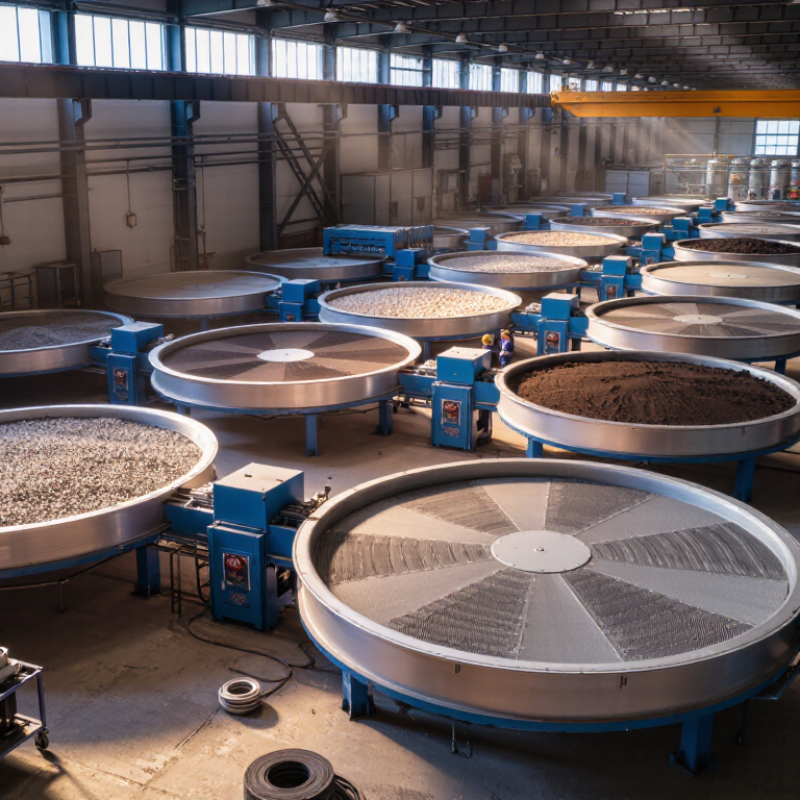
Circular screens are round, perforated or woven surfaces that separate materials by particle size. They may sit in vibrating separators, rotary units, or compact laboratory sifters. A screen’s openings determine which particles pass through; wire diameter, plate thickness, and open area also affect capacity and wear. In a food plant, a circular sieve can remove clumps from flour before mixing. In mineral processing, heavier-duty panels can classify crushed stone. The same shape does not mean the same performance.
Choosing a screen starts with the material, not the machine catalogue. Check particle size range, moisture, temperature, abrasiveness, and required throughput. Wet, sticky feed may block small openings, while sharp aggregate can wear thin wire quickly. Confirm the frame dimensions and how the screen is tensioned or clamped. Ask suppliers for material specifications and test data, then compare samples under realistic feed conditions. Laboratory results can be misleading; actual production varies, and operators sometimes discover that after installation.
Tips: Measure the usable screening area, not just the outer diameter. Record opening size and wire or plate thickness. Inspect for stretched mesh, blocked apertures, or uneven wear during routine checks. Keep a sample of the original screen for comparison. Small details matter. One overlooked clamp can cause vibration, noise, and early damage.
Key Types, Materials, and Manufacturing Technologies
Circular screens are not one product category. In mineral processing, circular vibrating screens separate graded stone, sand, or ore. For powders, enclosed circular sifters help classify smaller, drier particles. The right design depends on feed size, moisture, throughput, and cleaning needs. A fine mesh can improve separation, but it may blind when material is damp. Small details matter.
Screening surfaces commonly use woven stainless-steel wire, perforated metal, or molded polyurethane. Wire offers open area and precise sizing; thicker plate or polyurethane can suit heavier impacts. Frames may use carbon steel or stainless steel, depending on the environment and cleaning requirements. Manufacturing can include wire weaving, laser cutting, punching, welding, and polyurethane molding. Accurate tensioning and balanced assembly help reduce vibration-related wear. Still, a well-made screen can perform poorly if its aperture or motion does not match the material.
Tips: Ask for aperture tolerances, material specifications, and inspection records. Share a representative sample and operating conditions when requesting a selection. Check how panels fit the machine. A drawing helps, though it cannot replace a real feed trial.
Criteria for Evaluating Circular Screen Manufacturers
10 Best Circular Screen Manufacturers for Global Buyers
Criteria for Evaluating Circular Screen Manufacturers
Compare manufacturers by measurable performance, not catalog claims. Check aperture size, open area, wire or perforation material, frame dimensions, and fit with your separator. Ask for sample inspection records and test methods. A screen that looks identical may behave differently under vibration.
The ISO Survey 2022 recorded 1,265,216 valid ISO 9001 certificates across 189 countries and economies. This broad figure shows why certification alone is a weak filter: it does not prove screen-specific quality. Request material traceability, dimensional inspection results, and documented production controls. Ask for proof.
For circular screens, confirm how the supplier checks mesh openings and tension, and whether relevant methods such as ISO 3310-1 or ASTM E11 apply to the product. Compare repeatability across samples, not just one favorable test. Request details on corrosion resistance, replacement-part availability, packaging, and realistic lead times. A smooth sales process can still hide vague tolerances. I would treat unanswered questions about wear life as a warning, while remembering that service life also depends on feed material, cleaning, and operating conditions.
Profiles of 10 Circular Screen Manufacturers for Global Buyers
A useful comparison of ten circular screen manufacturers starts with the duty, not the brochure. Buyers should check screen diameter, deck count, vibration settings, feed size, and wet or dry operating conditions. Ask for capacity data using material similar to yours. A neat test report matters.
The USGS Mineral Commodity Summaries 2025 estimates world copper mine production reached about 23 million metric tons in 2024. The International Energy Agency’s Global Critical Minerals Outlook 2024 also warns that announced projects may leave supply gaps for some minerals by 2035. These figures do not predict screen sales. They do show why reliable separation and steady throughput matter in processing plants.
The profiles compare practical factors: construction materials, access to replacement parts, service coverage, and documented performance. Look for clear information on bearing protection, screen-media changes, and noise levels. Ask how the supplier handles abrasive feed and unexpected moisture. A specification sheet cannot answer everything. One weak point in many comparisons is the lack of comparable test conditions; buyers should request them before treating capacity claims as equivalent.
How to Compare Suppliers, Certifications, and Purchasing Terms
A useful comparison starts with the actual screen, not a polished catalog image. Ask each supplier for the active display diameter, resolution, brightness, viewing angle, and supported interface. Request a sample and test it under your own lighting conditions. Check color consistency near the curved edge, touch response if applicable, and performance after several hours of continuous use. Small differences matter. A sample may look excellent while a production batch varies, so ask how each unit is inspected and documented.
Treat certifications as evidence to verify, not a checkbox. Confirm that documents match the product model and intended market, and check their issuer, validity, and scope. A factory-level certificate does not automatically cover every screen. Ask for recent inspection records, material declarations, and a clear description of quality controls. If answers are vague, pause. Supplier presentations can be persuasive, but they do not replace records you can review.
Purchasing terms deserve the same attention as technical specifications. Put sample approval, production lead time, minimum order quantity, packaging, payment schedule, and delivery responsibility in writing. Define acceptable defect rates and how replacements or spare units will be handled. Compare warranty coverage carefully, including what evidence a claim requires. A spreadsheet helps, though it cannot capture every risk; I have seen a low unit price become less attractive once custom packaging and delayed parts were included. Ask for a full landed-cost estimate, then leave room for uncertainty.
10 Best Circular Screen Manufacturers for Global Buyers — How to Compare Suppliers, Certifications, and Purchasing Terms
This suggested 100-point scorecard helps buyers compare circular-screen suppliers consistently; the weights are a procurement framework, not market statistics or ratings of specific manufacturers. Verify that certificates are current and cover the relevant product, site, and market. Confirm sample performance, minimum order quantity, lead time, warranty coverage, and payment terms in writing before placing an order.