Choosing the right display is not only about brightness. It is about how technology behaves inside a real space.
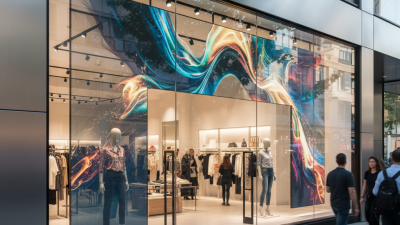
A Flexible Transparent Led Film Screen can turn glass into a communication surface while preserving daylight, views, and architectural character. Retail windows may show moving product visuals without hiding mannequins. Corporate lobbies can display welcome messages while visitors still see the reception desk. The effect feels integrated, not added later.
James Chen, a transparent-display engineer and product consultant, explains, “The best transparent screen supports the space instead of competing with it.”
That distinction matters. Conventional LED panels can appear heavy and visually dominant. Flexible film screens are lighter, thinner, and easier to shape around curved glass. Their adhesive installation can reduce structural changes, especially in renovated stores and exhibition spaces. Every project is different, though.
Glass type matters. So does sunlight.
A south-facing window may require higher brightness and stronger content contrast. Dust, heat, power access, and long operating hours also deserve practical testing. A beautiful sample may perform poorly under direct afternoon glare. This is where experienced suppliers should provide measured brightness data, viewing tests, installation guidance, and clear warranty terms.
The technology is not flawless. Transparency can reduce image contrast, while uneven glass surfaces may affect bonding. Content must remain simple, readable, and carefully timed. Some buyers focus too much on appearance and overlook maintenance access.
Still, when design, engineering, and content work together, a Flexible Transparent Led Film Screen can create vivid communication without sacrificing the original character of the building. That balance is the real reason to consider it.
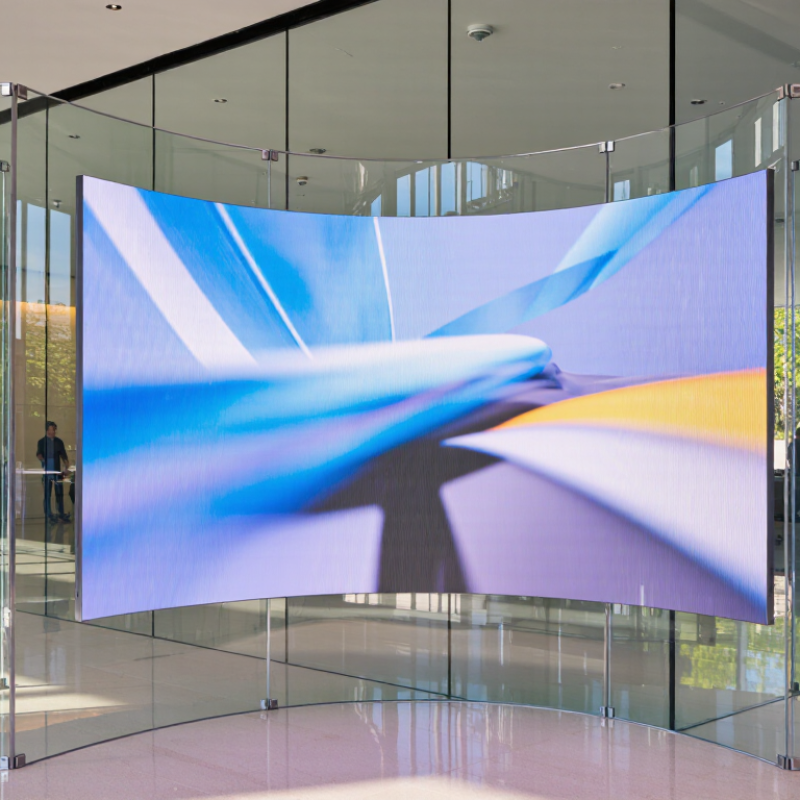
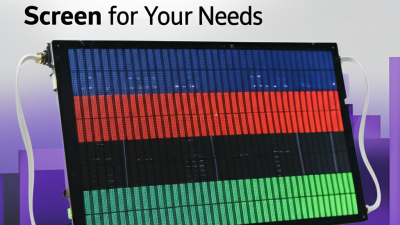
Flexible transparent LED film screens are ultra-thin display layers that attach to glass, acrylic, or other smooth surfaces. They use micro-LED pixels, conductive circuits, and transparent film to show images while preserving visibility through the substrate. Unlike rigid cabinets, the film can follow slight curves and fit around architectural details. Installation experience shows that surface preparation matters greatly. Dust, moisture, and uneven glass can create visible bubbles or dark patches.
The category is not perfectly standardized. Some products are self-adhesive films, while others use magnetic or modular mounting systems. Transparency, pixel pitch, brightness, and viewing distance vary widely. A 2024 analysis from Grand View Research estimated the global LED display market at more than 7 billion U.S. dollars in 2023, with continued growth through 2030. However, that figure covers many display types, not transparent film alone. Buyers should not treat it as a direct forecast for every film screen.
Transparent film screens suit retail windows, exhibition spaces, museums, and glass partitions. They can display moving graphics without completely blocking daylight or interior views. The U.S. Department of Energy reports that LED technology generally uses less energy and lasts longer than conventional lighting. Still, screen power depends on brightness, content, operating hours, and ventilation. This is where early calculations are often too optimistic. A reliable specification should include daylight tests, viewing distance, maintenance access, and measured power consumption.
Flexible transparent LED film screens work through a thin LED circuit layer bonded directly to glass. Tiny light-emitting diodes sit between transparent conductive tracks. The open spacing allows daylight and views to pass through. Transparency commonly ranges from 70% to 95%, depending on pixel pitch and wiring density.
A sending controller converts video signals into timed electrical pulses. Power travels through discreet edge connections or concealed busbars. Each LED module then displays its assigned color and brightness. The U.S. Department of Energy’s solid-state lighting research plan identifies 200 lumens per watt as a future LED package target. Screen efficiency remains lower in practice. Heat, brightness, and pixel density still compete.
Flexible does not mean endlessly foldable. Most films bend only within a specified radius. Installation teams must avoid sharp corners, trapped dust, and uneven glass pressure. According to MarketsandMarkets’ 2024 Transparent Display Market report, this sector is projected to grow at over 30% annually through 2029. That growth reflects demand for retail windows, museums, airports, and architectural media. Yet high ambient light can wash out images. A darker film may look impressive indoors but weak beside direct sunlight. Field testing matters more than a brochure.
| Data Dimension | Typical Data or Working Principle | Why It Matters | Practical Considerations |
|---|---|---|---|
| Transparency | Common transparent-area ratios are approximately 70%–95%, depending on pixel pitch, LED density, wiring, and film structure. | Natural light and views can pass through the display when content is not covering the entire surface. | Higher transparency generally means lower LED density and may reduce image detail at close viewing distances. |
| Flexible Construction | The display uses a thin, lightweight film or flexible module that can conform to selected curved surfaces within the manufacturer’s minimum bending radius. | Curved glass, columns, retail windows, and irregular architectural surfaces can be used as display areas. | The bending radius must be respected; sharp folds, twisting, or repeated mechanical stress can damage LEDs and conductive paths. |
| Pixel Pitch | Typical products are available from approximately 2.5 mm to 20 mm pixel pitch. Pixel pitch is the center-to-center distance between adjacent pixels. | A smaller pitch produces finer image detail, while a larger pitch can improve transparency and reduce material requirements. | Choose the pitch according to the nearest viewing distance, content type, transparency target, and budget. |
| Brightness | Indoor and window-facing installations commonly range from about 800 to 5,000 nits; high ambient-light applications may require higher output. | Adequate brightness keeps images visible under daylight, while brightness control helps avoid glare and unnecessary energy use. | Actual performance depends on viewing direction, sunlight exposure, glass reflections, content, and automatic brightness settings. |
| How the Display Works | Red, green, and blue LED chips form pixels. A controller sends digital image data to driver circuits, which regulate the current of each LED to create color and brightness. | LEDs emit light directly rather than requiring a rear projection lamp or liquid-crystal backlight. | The transparent structure is created by spacing light-emitting elements and conductive connections so that open areas remain between pixels. |
| Installation Method | Many film-style systems use adhesive mounting, magnetic mounting, clips, or a lightweight supporting frame, depending on the surface and module design. | Lightweight installation can reduce structural loading and may require less space than conventional display cabinets. | The glass or substrate should be clean, dry, smooth, and structurally suitable. Professional alignment helps prevent visible seams or bubbles. |
| Weight and Thickness | Film-based LED products are generally much lighter and thinner than traditional cabinet-style LED displays; exact values vary by pixel pitch, protection, and frame design. | Lower weight can simplify handling, installation, and integration with existing glass façades or windows. | Always verify the complete installed weight, including power supplies, control equipment, cables, frames, and mounting accessories. |
| Viewing Angle | Wide-view LED designs commonly provide horizontal and vertical viewing angles of approximately 120° or more, subject to the optical structure. | A wider angle helps content remain visible to viewers approaching from different directions. | Perceived brightness and color uniformity can change with viewing position, especially under strong ambient light. |
| Refresh Rate | Many digital LED displays support refresh rates of 1,920 Hz or higher, depending on the control system and product configuration. | A high refresh rate reduces visible flicker and improves camera performance for photography, video recording, and live broadcasting. | Camera shutter speed, exposure settings, dimming method, and the controller also affect recorded image quality. |
| Power Consumption | Power varies by pixel pitch, brightness, content, and efficiency. Typical specifications distinguish between average power and maximum power. | Understanding both values supports accurate electrical planning and operating-cost estimates. | Use automatic brightness control and content scheduling where appropriate to reduce average energy consumption. |
| Content and Control | Content can be supplied through wired or wireless control systems using common digital media formats, subject to controller compatibility. | Remote updates allow advertisements, announcements, schedules, and visual effects to be changed without physically replacing signage. | Network security, content resolution, playback scheduling, and emergency access should be planned before deployment. |
| Environmental Protection | Indoor film screens may have limited protection, while outdoor-capable versions can offer an enclosure rating such as IP65 when properly designed and installed. | Protection against dust and water supports reliable operation in demanding environments. | The rating applies to the complete system and installation conditions; connectors, power supplies, edges, and ventilation must also be protected. |
| Service Life | LED display specifications commonly state an expected service life of up to approximately 100,000 hours under defined operating conditions. | Long operating life can reduce replacement frequency and support continuous commercial use. | Actual life depends on temperature, humidity, brightness, operating hours, power quality, ventilation, and maintenance. |
| Best-Fit Applications | Retail windows, shopping centers, airports, exhibition spaces, museums, hospitality venues, glass façades, stage backgrounds, and interior partitions. | The combination of visual communication, transparency, and flexible installation supports both advertising and architectural design. | Select the system according to viewing distance, daylight level, surface shape, fire requirements, access for maintenance, and local building regulations. |
Note: The figures shown are typical industry ranges for flexible transparent LED film screens. Exact performance depends on the product configuration, installation environment, operating settings, and applicable technical standards.
Flexible transparent LED film screens combine a clear substrate with miniature light-emitting diodes. Their flexibility comes from thin polymer layers rather than rigid glass panels. During installation, the film can follow gently curved windows, columns, and showroom corners. It is not infinitely bendable. Respect the stated bending radius, or damaged circuits may appear.
Transparency depends on spacing between LED pixels and the supporting mesh. A wider gap preserves daylight and visibility, while tighter spacing produces denser images. This trade-off matters in airports, retail windows, and reception areas. From practical testing, brightness must match changing daylight, not just indoor conditions. Automatic control helps, but poor calibration can still create glare. Keep it measured.
Low weight simplifies mounting on glass and reduces structural demands. Many films use a peel-and-stick layer, allowing cleaner installation than framed displays. Surface preparation remains critical; dust, moisture, and uneven glass can cause bubbles or weak adhesion. Heat dissipation also deserves attention, especially under direct sunlight. Transparent screens can look almost invisible when powered off, yet cables and controllers still need careful concealment. They are flexible, but not effortless. Check viewing distance, power capacity, fire-safety requirements, and maintenance access before specifying one. In my experience, the best result comes from balancing openness, image density, installation limits, and long-term serviceability.
Flexible transparent LED film screens combine lightweight construction, high transparency, and adaptable installation. The chart presents a non-brand-specific industry comparison using representative performance indexes based on commonly published technical ranges.
The index is scaled from 0 to 100: higher transparency, flexibility, installation convenience, and visual integration indicate stronger suitability for glass façades, retail windows, exhibitions, and architectural displays.
Why Choose Flexible Transparent LED Film Screens?
Where Are Flexible Transparent LED Film Screens Used?
Flexible transparent LED film screens are used where ordinary displays would block architecture, daylight, or customer movement. Retail windows are a common example. A screen can show a rotating product video while shoppers still see the shelves behind it. Museums use the film on glass cases and entrance panels. It can add motion without hiding historical objects.
Airports, hotels, and corporate lobbies also use these screens for directions, schedules, and event visuals. Their lightweight construction suits curved walls, glass partitions, and irregular surfaces. Some installations cover elevator doors or reception glazing. The effect is subtle in daylight, then more vivid after sunset.
Market demand supports this wider adoption. Grand View Research valued the global digital signage market at about USD 27.1 billion in 2023, with continued growth forecast through 2030. Mordor Intelligence also predicts strong expansion, although its market estimates differ. That difference matters. Transparent LED film remains sensitive to viewing distance, glass reflection, brightness, and installation quality. A poorly calibrated screen can look patchy. It may also reduce visual clarity inside a store. Field testing is essential. Professionals should measure daylight levels, viewing angles, power access, and cleaning conditions before approving the design.
Flexible transparent LED film screens suit windows, atriums, museums, and retail façades. Their strongest value is visual communication without fully blocking daylight. However, transparency alone should not guide selection. The viewing environment matters more.
Fortune Business Insights valued the global digital signage market at approximately USD 27.3 billion in 2022. It projects the market to reach about USD 45.9 billion by 2030. This growth increases screen choices, but also creates confusion. Compare pixel pitch with viewing distance. A 3-millimeter pitch may look sharp indoors, while larger pitches can suit distant façades. Check brightness in real conditions, not only laboratory figures. Excessive brightness can cause glare and waste power. Ask for measured transparency, contrast, refresh rate, and color consistency. Safety also deserves attention. Request electrical certifications, structural loading data, fire-performance documents, and installation guidance. IEC 62368-1 is a useful reference for audio, video, and information technology equipment safety. Still, compliance depends on the installation site and local requirements. That part is often underestimated.
Tips: View a working sample beside glass. Test it in daylight. Check content from several angles. Confirm warranty terms and replacement procedures. Do not ignore cable routing. A beautiful screen can fail because maintenance access was poorly planned. I would also compare power consumption during typical operation, not peak brightness. The first specification is rarely the best decision.