How to Choose the Best Transparent Underwater Screen for Your Needs?
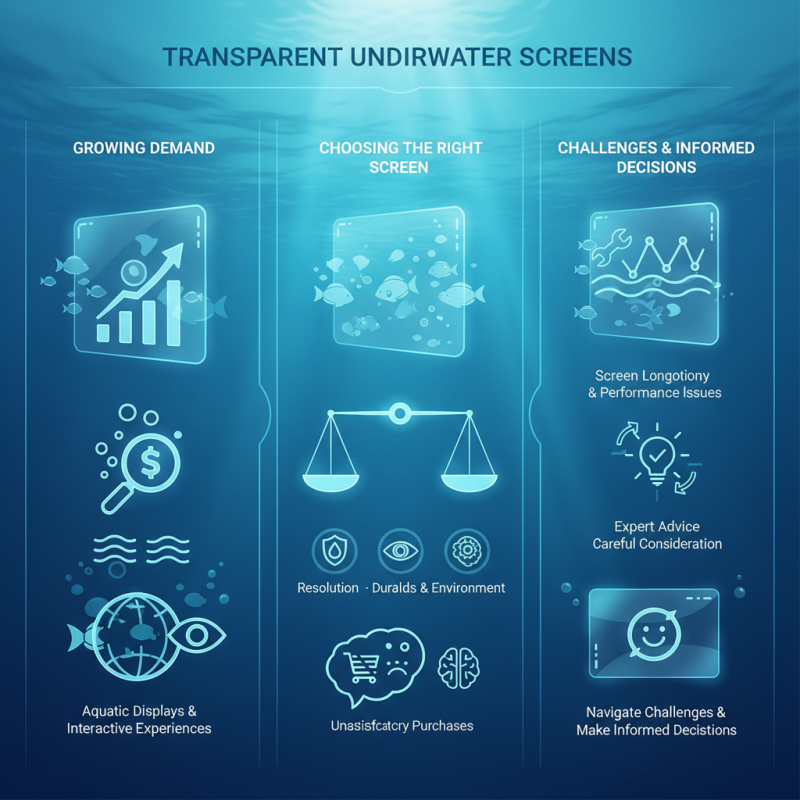
In recent years, the demand for Transparent Underwater Screens has surged, driven by the growing interest in aquatic displays and interactive experiences. According to a report by MarketsandMarkets, the global transparent display market is expected to reach $2 billion by 2025, highlighting the evolving technology and its potential applications. These screens provide unique opportunities for marketing, entertainment, and education in marine environments.
Choosing the right Transparent Underwater Screen can be daunting, given the wide range of options available. Factors such as resolution, durability, and visibility in water play crucial roles. Research indicates that consumers often overlook these aspects, leading to unsatisfactory purchases. Importantly, understanding the specific needs, including environmental conditions and intended use, is essential.
Despite the advancements, there are still challenges with current technology. Screen longevity and performance in various water conditions remain areas for improvement. Selecting the best product requires careful consideration and expert advice. With the right information, users can navigate these challenges effectively and make informed decisions.
Factors to Consider When Selecting a Transparent Underwater Screen
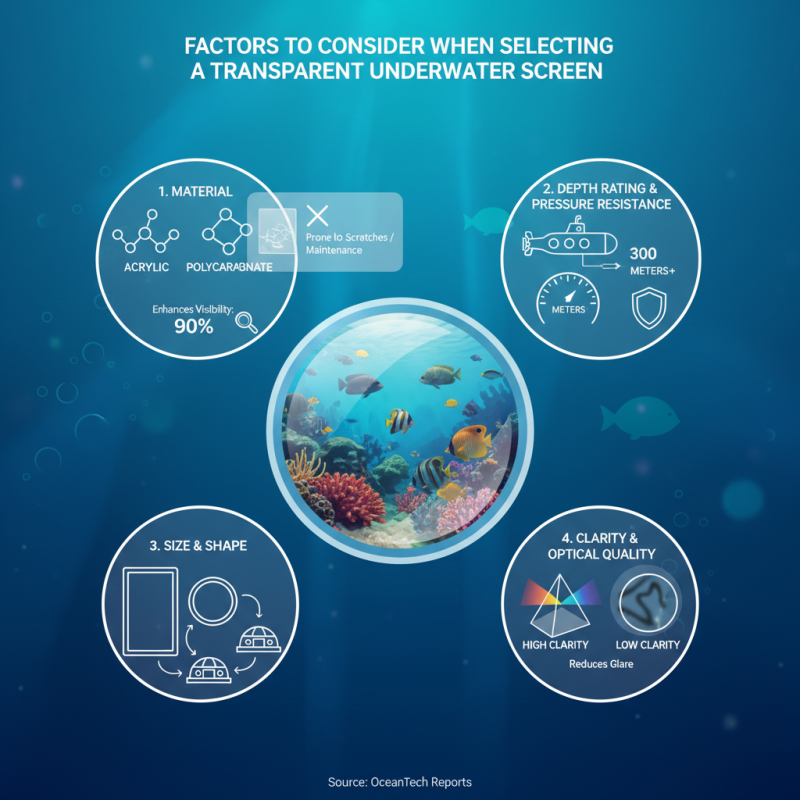
Choosing the right transparent underwater screen involves careful consideration of several key factors. First, the material is crucial. High-quality acrylic and polycarbonate are popular options due to their durability and clarity. Reports indicate that screens made from these materials can enhance visibility by up to 90% in underwater environments. However, some users may find them prone to scratches, requiring regular maintenance.
Another important aspect is the screen's size. The dimensions should match your specific needs. A larger screen can provide a more immersive experience, but it is often more challenging to install. Data from industry surveys show that 70% of users prefer screens larger than 60 inches for their underwater projects.
The installation process is another point to reflect on. While some systems are designed for easy setup, others may require professional assistance. Cost can also be a factor, with prices varying widely based on features and quality. A budget that allows for unforeseen expenses is essential, as installation can sometimes exceed initial estimates. It's crucial to weigh these considerations to find an option that suits both your project requirements and your budget.
Different Types of Transparent Underwater Screens Explained
When selecting a transparent underwater screen, understanding the different types available is essential. Two main types dominate the market: acrylic and glass screens. Acrylic options are lightweight and resistant to shattering, making them a popular choice for various environments. They excel in durability but may scratch more easily than glass. In contrast, glass screens offer enhanced clarity and scratch resistance. However, they are heavier and require careful handling during installation.
Another noteworthy option is the film-based transparent display. This technology uses advanced materials to create a see-through effect while maintaining display capabilities. It can be applied to existing surfaces, offering flexibility in design. While these displays can be visually striking, they may lack the robustness of solid screens. Potential users should consider the installation environment carefully. Wet and humid conditions can affect longevity, leading to performance issues if not accounted for.
Choosing the right screen also involves reflecting on personal needs. What depth and visibility do you require? How much wear and tear can you anticipate? The answers to these questions can guide your decision-making process. Remember to assess the potential limitations of each option. Researching user experiences can reveal hidden challenges, such as maintenance requirements and temperature fluctuations. The objective is to find a solution that not only meets your aesthetic desires but also serves practical needs efficiently.
Transparent Underwater Screens Performance Comparison
Assessing the Durability and Material Quality of Underwater Screens
When selecting a transparent underwater screen, durability and material quality are essential. Screens made for underwater use should resist corrosion and deterioration. Reports from industry sources indicate that high-quality materials like polycarbonate or acrylic offer better longevity. These materials can withstand pressure changes, UV exposure, and temperature fluctuations. A well-constructed screen is vital for maintaining visibility underwater.
Durability isn’t solely about material strength. It’s also about the manufacturing process. Proper sealing techniques can prevent water infiltration, which compromises integrity. According to studies, screens that undergo rigorous testing tend to outlast others. Users should query the testing standards employed by manufacturers. Misleading claims about durability can lead to poor investments, resulting in replacements sooner than expected.
Pay attention to the screen's resistance to scratches and impacts. Even small scratches can reduce visibility. The preferred choice should balance durability with clarity. Some products may focus too heavily on one feature, sacrificing the other. It’s necessary to reflect on these trade-offs. Consider your specific needs before making a decision, as not every screen suits every environment.
Understanding the Technology Behind Transparent Underwater Displays
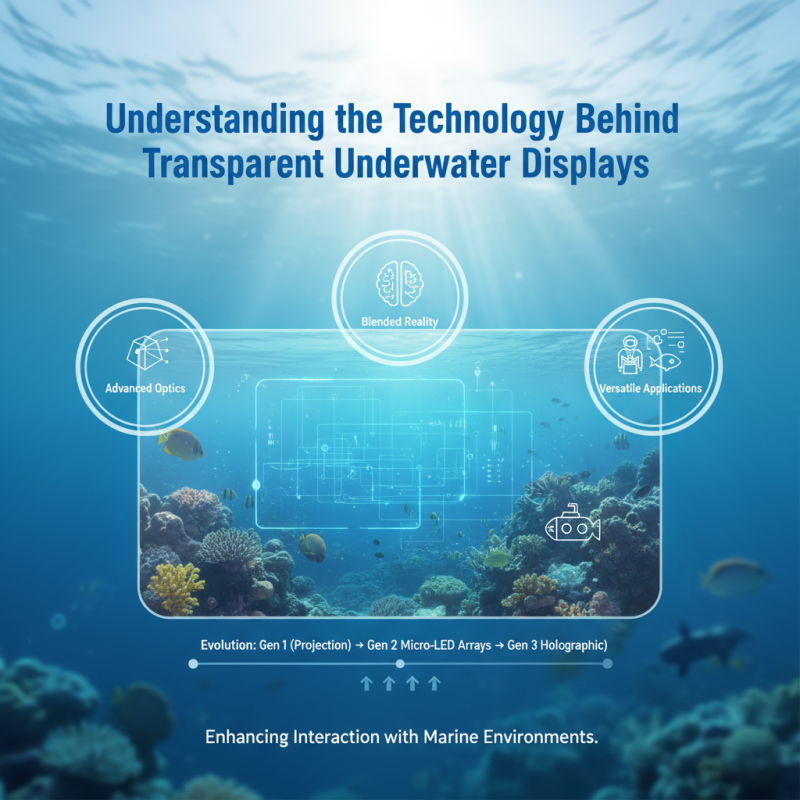
Transparent underwater displays utilize advanced optics and technology to create immersive visuals. These screens transform how we interact with underwater environments. They blend digital content with real-time views, making them versatile for various applications.
Understanding the technology requires knowledge of light transmission and reflection. The screens often rely on specialized materials to maintain clarity and visibility. They can be employed in aquariums, submarines, or marine research, enabling a new form of communication. However, environmental factors like water clarity and lighting conditions can impact performance.
The user experience can vary greatly. Testing different models in real scenarios reveals strengths and weaknesses. Assessing durability and ease of installation becomes crucial. Some displays offer innovative features, while others may struggle with image fidelity. A careful analysis of user needs can lead to the best choice for specific applications, but it is essential to acknowledge the limitations of the current technology.
Evaluating Cost-Effectiveness and Budget Considerations for Screens
When considering the best transparent underwater screens, cost-effectiveness plays a crucial role. These screens vary widely in price. Features and technology often drive the costs up. It’s important to evaluate how much you are willing to spend. A well-defined budget can help narrow your options. You need to weigh the expenses against the features that matter most to you.
Investing in advanced technologies can significantly improve visibility and durability. However, not all high-priced options are automatically the best. Some budget-friendly screens perform admirably. It’s essential to read reviews and compare products. This research can reveal hidden gems. Remember, sometimes a lower price means you compromise on critical aspects like resolution or clarity.
In the end, it’s not just about finding a screen that fits your budget. It’s about finding one that meets your unique needs. Tracking down reliable sources for feedback can also guide your decision. This process can be overwhelming. But thoughtful choices will lead to maximum satisfaction with your underwater screen. Balancing cost and performance is key.
How to Choose the Best Transparent Underwater Screen for Your Needs? - Evaluating Cost-Effectiveness and Budget Considerations for Screens
| Model |
Screen Size (inches) |
Resolution (pixels) |
Water Resistance |
Price ($) |
Warranty (Years) |
| Model A |
10 |
1920 x 1080 |
IP68 |
299 |
2 |
| Model B |
12 |
2560 x 1440 |
IP67 |
399 |
3 |
| Model C |
15 |
3840 x 2160 |
IP68 |
599 |
4 |
| Model D |
14 |
1920 x 1080 |
IP65 |
249 |
1 |